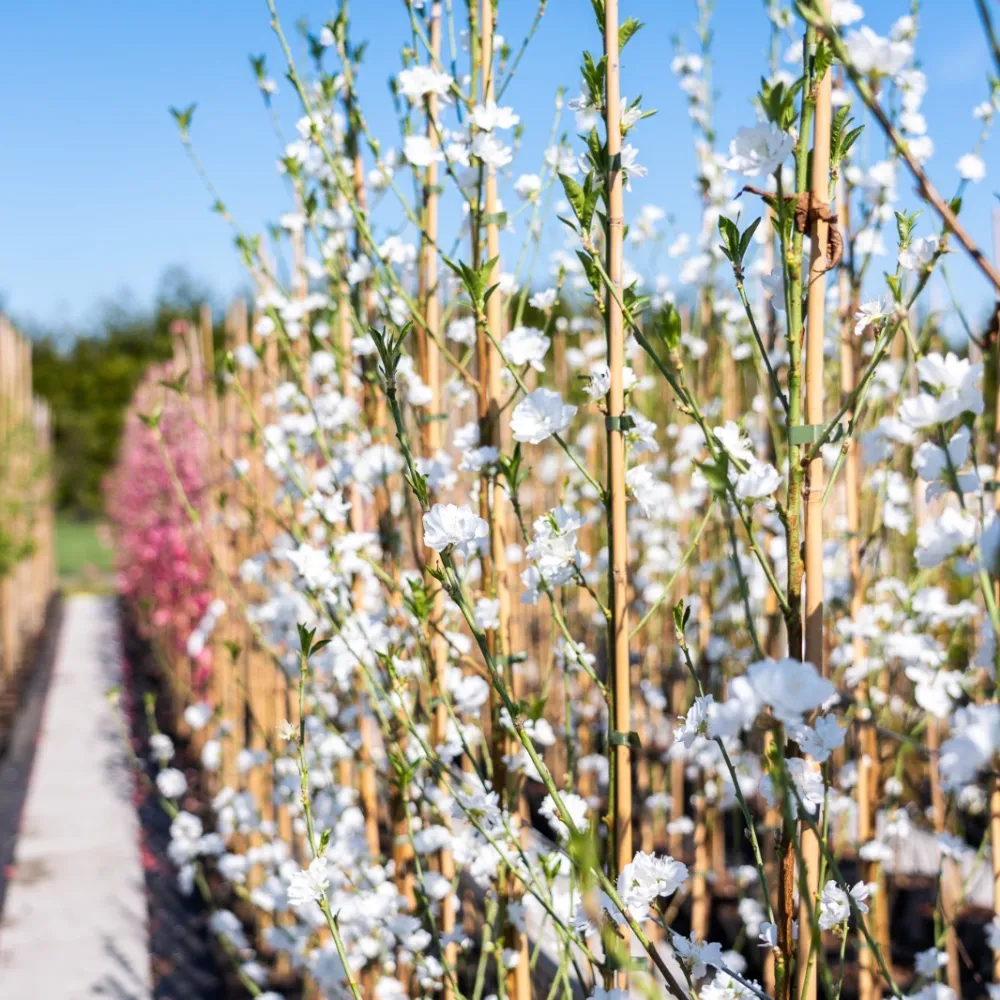
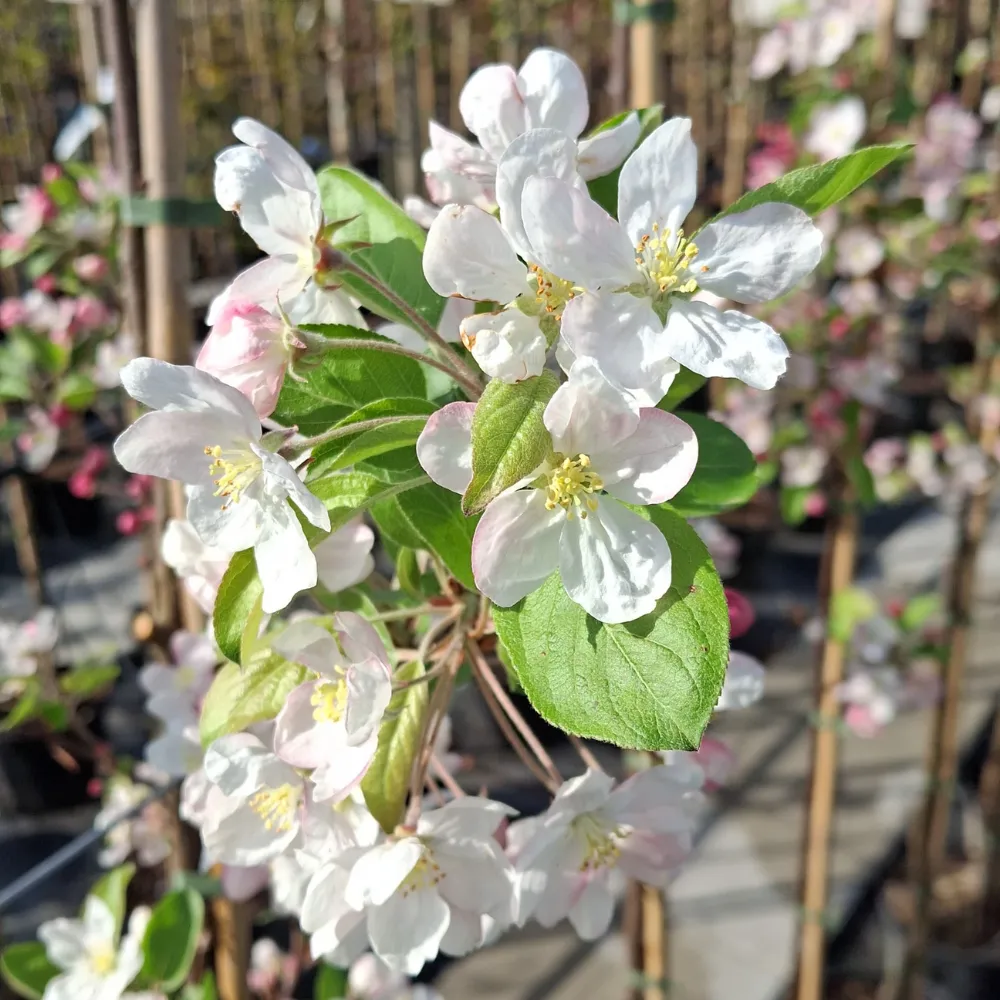
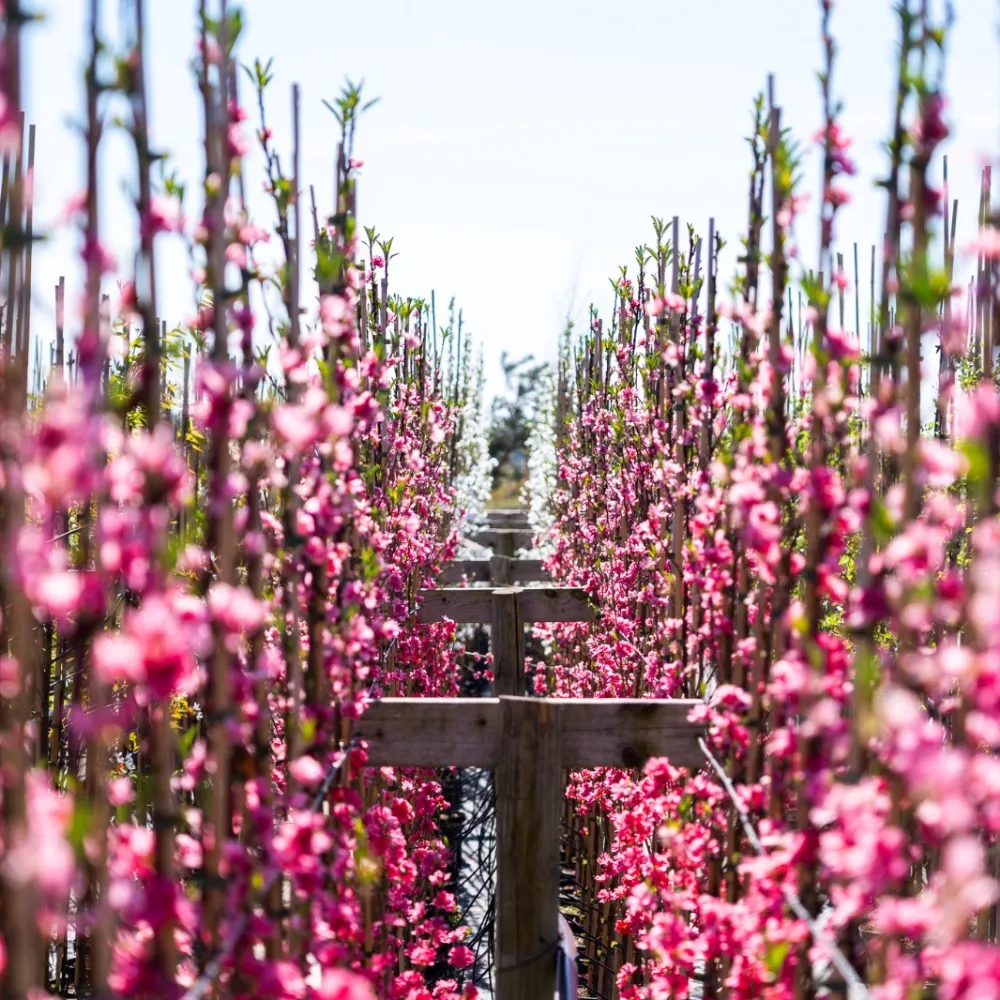
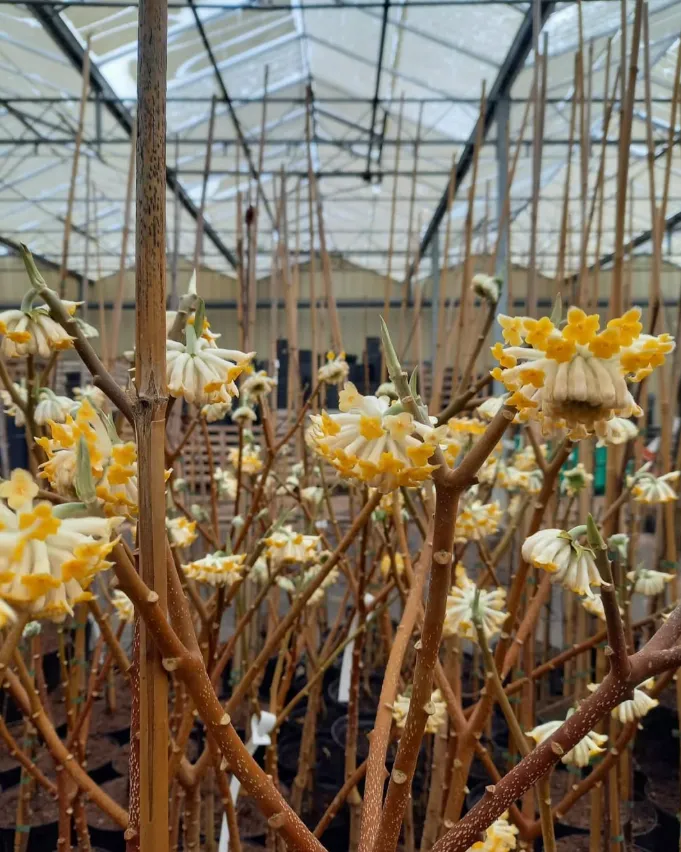
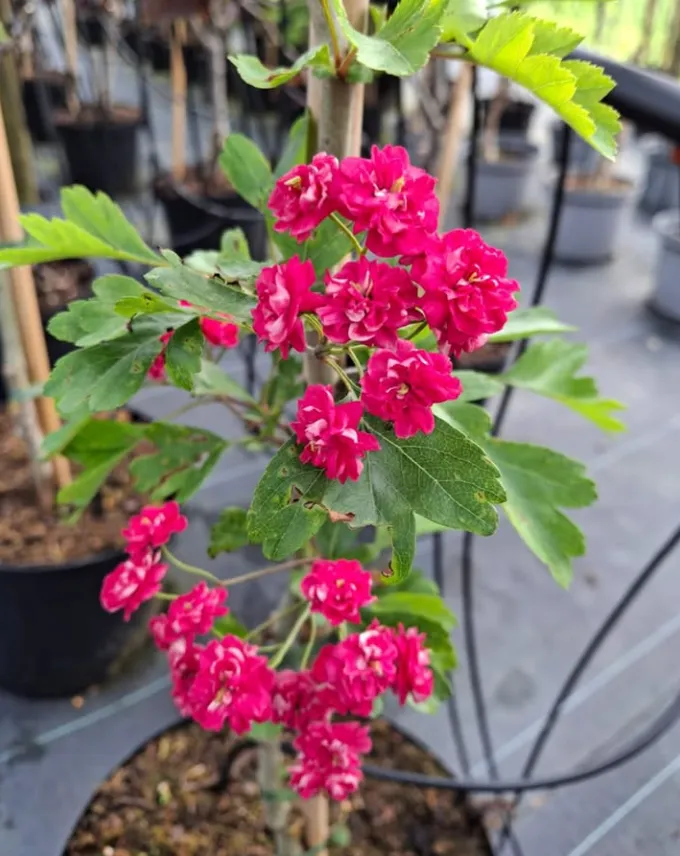
Timeless! Can be planted throughout the year




May: the month to care for, protect and support your young trees
- Posted on
The month to care for, protect and support your trees during growth.
How to care for your young trees in May
In May, most trees are already in leaf or in bloom. Growth energy is now at its peak. This is the perfect time to support your trees with the right nutrition, protect them against drought, and check for pests. In this blog, we explain what you can do in May to keep your trees healthy.
Planting trees in May: still a good idea or better to wait?
Yes, planting trees in May is certainly still possible, but it requires a little more attention than in the months of March and April. Temperatures are rising and the risk of drought is increasing. This makes it especially important to pay close attention to the conditions in which you plant.
Make sure, for example, that the tree does not dry out immediately after planting on a warm day, and place the tree in sufficiently moist soil. A dry root ball in the ground is very difficult to re-moisten once planted.
Key points to consider when planting in May:
- Make sure the root ball does not dry out before or after planting.
- Water immediately after planting and repeat as necessary.
- You can check the water needs by feeling the soil at a depth of 10 cm near the tree — it should feel slightly moist and hold together lightly.
- Note: too much moisture is also not beneficial.
Also read our care instructions.
How to protect your trees from drought and heat in May?
The chance of warm, dry weather in May is considerable. Newly planted and young trees are particularly vulnerable to these conditions.
Important measures:
- Check regularly and water as needed, especially in sandy soil.
- Organic material in the top layer of the soil helps water remain more available near the surface.
- Check tree stakes, rods, and tree ties; trees can lean or become damaged more quickly due to leaf mass and sudden growth spurts.
Can you prune trees in May?
May is not the best month for major pruning work, as many trees are in full growth. However, dead or damaged branches can certainly be removed. For specific species such as hedges or topiary trees, May is actually a good time for trimming.
Pruning tips for May:
- Limit yourself to maintenance pruning.
- Use sharp and clean tools.
- Avoid pruning during very warm or sunny weather.
Fertilising trees in May: a good idea?
Yes, May is still an excellent month for fertilising. Trees are actively growing and can make good use of extra nutrients. Useful tips:
- Use an organic fertiliser or specialist tree feed.
- Fertilise preferably before rainfall or water thoroughly afterwards.
- Keep fertiliser away from the trunk to prevent burning.
- Work the applied fertiliser into the top layer of soil around the tree.
May is the month to monitor for diseases and pests
With the warmer weather, aphids, caterpillars, and fungi also become active. Do not wait until damage becomes visible — check regularly.
Watch out for the following signs:
- Curled or gnawed leaves (aphids, caterpillars).
- White or orange spots on leaves (powdery mildew, rust).
- Sticky honeydew or black sooty mould on the leaves.
What can you do?
- Rinse aphids off with water or introduce natural predators such as ladybirds or predatory mites.
- Remove affected leaves or branches if the infestation is severe.
- Use a biological control method if necessary.
Conclusion: May is the month of care and protection
Spring is in full swing and your trees are growing vigorously. In May, it is all about watering correctly, fertilising, monitoring for pests, and ensuring that young trees remain firmly supported. This will help them enter the summer healthy and strong.
Do you have any questions about tree care in May? Feel free to contact us via WhatsApp or email for personal advice!